
May Day 2026: The Unfinished Fight for Dignity of Labour
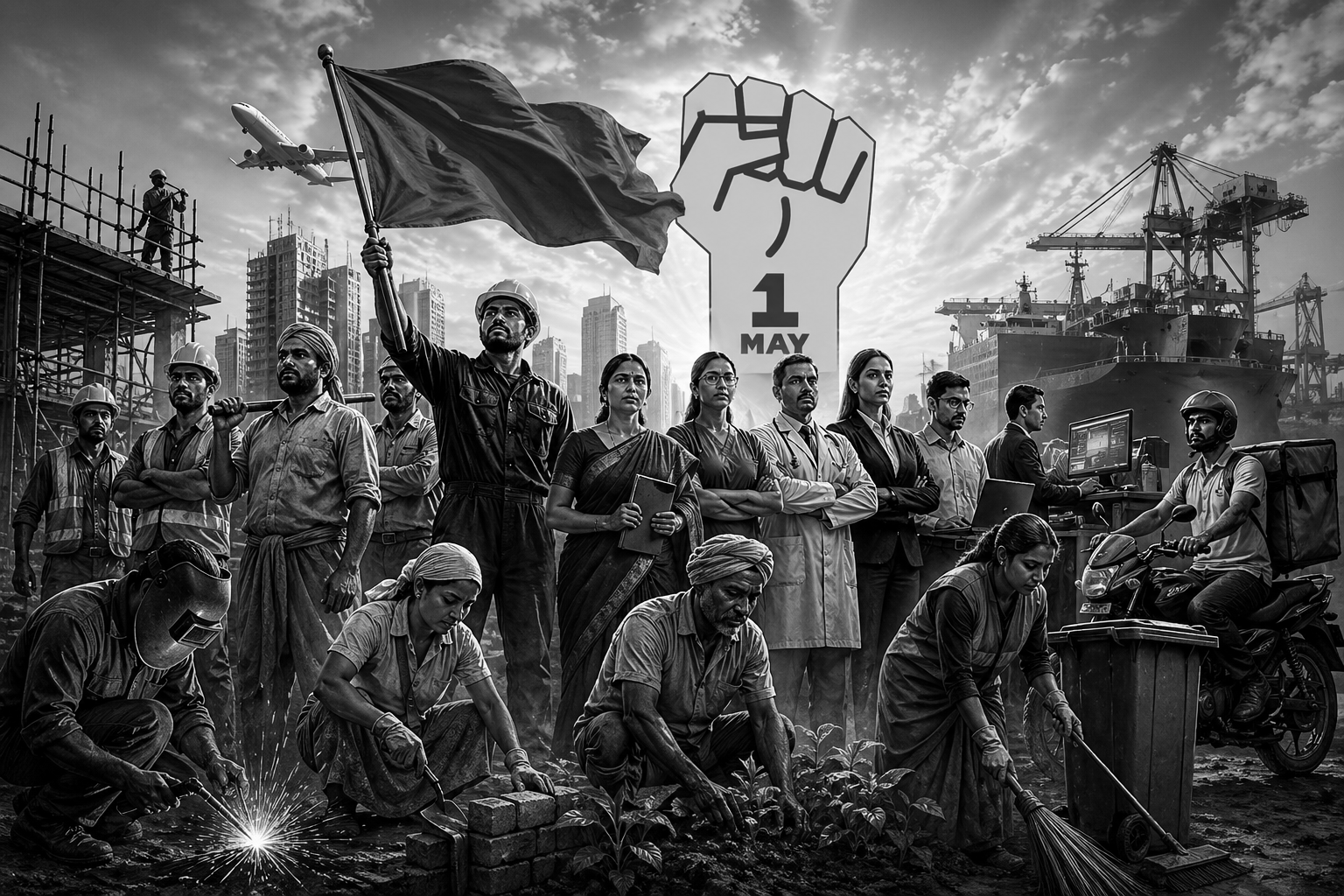
Before cities rise, before machines roar to life, and before economies grow, there is always a worker unseen, unheard, yet indispensable. Every road laid, every building constructed, every line of code written carries within it the silent testimony of human effort. Workers rarely stand in the spotlight, yet they hold up the world.
There is a quiet paradox in labour. The mason who builds a house may never own one. The weaver who creates fine fabric may never wear it. The delivery worker who ensures comfort for others may live without it. And still, they persist not for individual gain alone, but for the collective progress of society.
May Day is not merely a ceremonial holiday. It is a living reminder of sacrifice, dignity, and the enduring demand for fairness. It is a day that asks a simple but profound question: can progress truly exist without justice for those who create it?
The Origins of May Day: A Movement Born in Struggle
The story of May Day begins in the smoke-filled factories of the 19th century, where industrial growth came at the cost of human suffering. Workers laboured for up to 16 hours a day under dangerous conditions, with little rest and even less recognition.
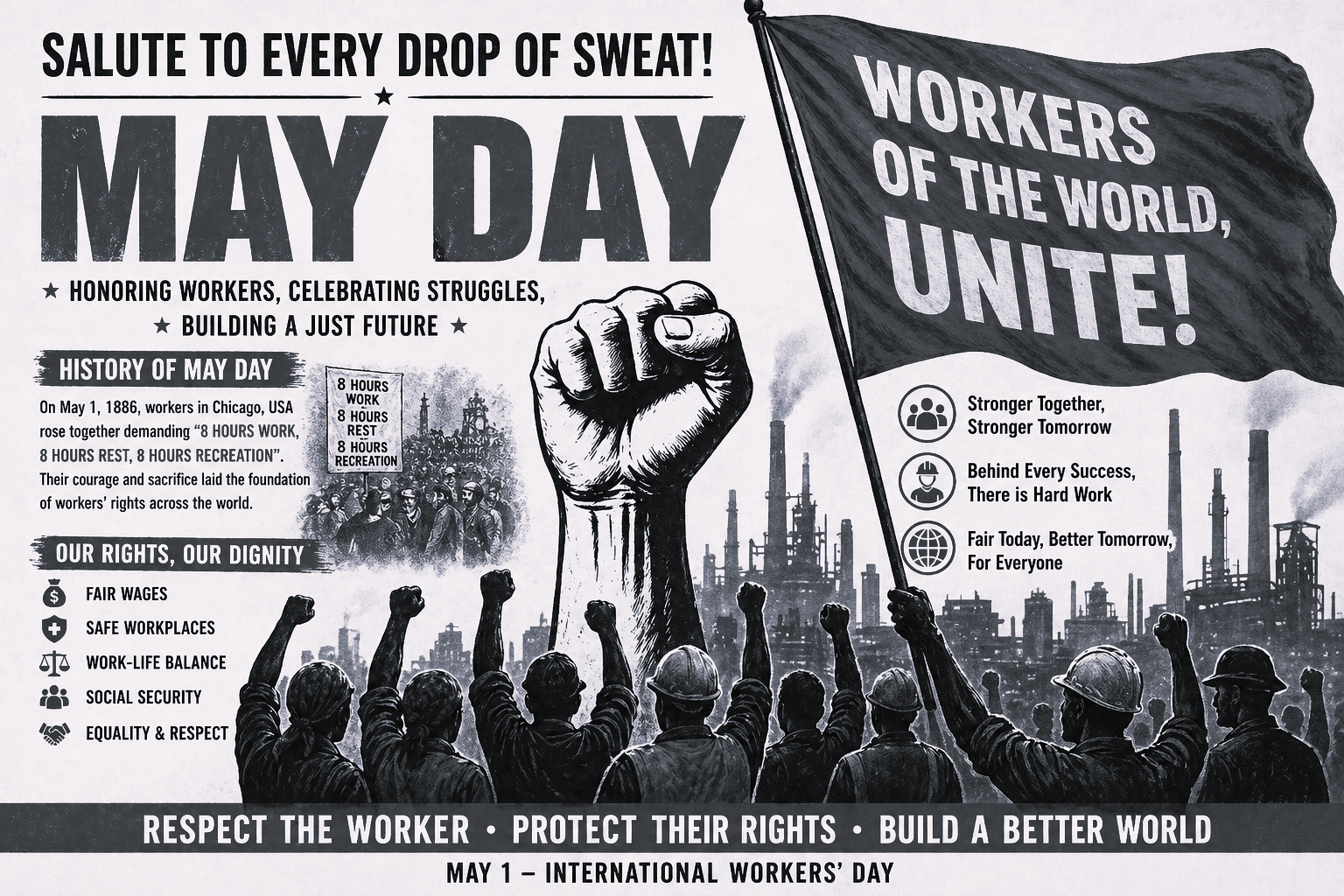
In May 1886, a wave of defiance swept across the United States. Workers demanded something revolutionary for its time an eight-hour workday. Chicago became the centre of this movement, where thousands gathered in protest. What began as a peaceful demonstration ended in tragedy at Haymarket Square, where violence claimed lives and turned workers into martyrs.
Yet, from that tragedy emerged a global movement. By 1889, May 1 was recognised internationally as a day to honour workers and their struggles. The bloodshed in Chicago did not silence the movement it amplified it.
The Eight-Hour Workday: A Revolutionary Idea
At the heart of the labour movement was a simple principle: balance. The demand for eight hours of work, eight hours of rest, and eight hours for personal life reshaped how societies viewed labour.
This was more than a demand for reduced hours; it was a declaration of humanity. It challenged the idea that workers were merely extensions of machines. It affirmed that they had families, dreams, and lives beyond their workplaces.
Today, this principle forms the backbone of labour laws worldwide. Yet, its spirit continues to be tested in an era where work often spills beyond boundaries.
India’s May Day Journey: From Chennai to Nationwide Symbol
India’s relationship with labour movements is deeply rooted in its history of resistance. Long before formal recognition, workers across sectors voiced their concerns, including early strikes by railway workers in the 19th century.
The formal observance of May Day in India began in 1923 in Chennai, when labour leader Singaravelu Chettiar organised celebrations and introduced the red flag as a symbol of worker unity. It marked a turning point, transforming scattered struggles into a collective identity.
Over time, May Day in India evolved beyond industrial labour. It came to represent farmers, informal workers, domestic help, and professionals alike uniting diverse voices under a shared demand for dignity.
Labour as the Backbone of Economic Growth
No nation can grow without its workforce. From agriculture to advanced technology, every sector relies on human effort. Labour is not just an input in economic systems it is the foundation upon which those systems stand.
Yet, recognition often lags behind contribution. Workers remain undervalued, particularly in informal sectors where protections are minimal. May Day serves as a reminder that economic growth without equitable distribution is incomplete.
Globalisation and the Changing Face of Exploitation
The late 20th century brought globalisation, promising efficiency and opportunity. But it also transformed the nature of labour exploitation.
Today, the factory floor has expanded into office spaces and digital platforms. Long hours, high pressure, and performance metrics have replaced traditional forms of control. The eight-hour workday, once a hard-won victory, is frequently stretched or ignored.
In many cases, exploitation is less visible but equally impactful embedded in expectations, deadlines, and job insecurity.
India’s Labour Reforms: Progress and Debate
India’s recent labour reforms, consolidated into four labour codes, aim to simplify regulations and improve economic efficiency. While these changes promise streamlined processes, they have also sparked debate.
Supporters argue that reforms encourage investment and job creation. Critics warn that they may weaken protections, particularly for informal workers who already lack security.
This tension reflects a broader challenge: balancing economic growth with social justice.
Rise of the Gig Economy: Opportunity or Insecurity?
The gig economy represents one of the most significant shifts in modern labour. Delivery partners, ride-hailing drivers, and freelance workers now form a growing segment of the workforce.
Flexibility is often cited as its biggest advantage. However, it comes with trade-offs lack of job security, absence of benefits, and unpredictable income.
Across India, gig workers are organising and demanding recognition, fair wages, and social security. Their struggles echo the early labour movements, reminding us that history often repeats itself in new forms.
Women in the Workforce: Progress with Persistent Gaps
Women have become an integral part of the workforce, contributing across sectors. Yet, their journey remains marked by inequality.
Wage disparities persist, safety concerns continue, and representation in leadership roles remains limited. For many women, the workplace is still a space that demands negotiation between opportunity and security.
May Day highlights these challenges, reinforcing the need for inclusive and equitable labour systems.
The Role of Trade Unions in a Modern Economy
Trade unions have historically been the backbone of labour rights movements. Through collective bargaining, they secured wages, benefits, and protections that individual workers could not achieve alone.
However, their influence has declined in recent years due to changing employment patterns and external pressures. In a fragmented workforce, rebuilding collective strength has become more complex but also more necessary.
Labour and Sustainability: A New Frontier
As the world confronts climate change, labour rights are intersecting with environmental concerns. Workers in pollution-heavy industries face health risks, while unsustainable practices threaten long-term livelihoods.
The concept of “green jobs” is emerging as a solution offering employment that supports environmental sustainability. This shift represents a new dimension of labour struggles, where economic and ecological goals must align.
Contemporary Labour Movements in India
Labour movements in India today are diverse and dynamic. From public sector protests against privatisation to gig workers demanding rights, the scope of activism has expanded significantly.
Recent strikes, including those in the transport sector, demonstrate the continued relevance of collective action. These movements are not just about wages they are about recognition, identity, and the right to a secure future.
May Day Today: More Relevant Than Ever
Every year, May Day is marked by red flags, rallies, and slogans that echo across cities and towns. But beyond the symbolism lies a deeper purpose to reflect, reassess, and renew commitment to labour rights.
In a world where old challenges persist and new ones emerge, the spirit of May Day remains vital. It reminds us that progress is meaningful only when it includes those who make it possible.
The divide between employer and worker may exist in function, but it must never exist in humanity. True development lies not just in growth, but in fairness.
As the slogan goes, “Workers of the world, unite.” It is not just a call it is a necessity for building a future rooted in dignity, equality, and shared prosperity.